What are the pros and cons of a novated lease?
A novated lease can save you money through tax and GST benefits, and it makes managing running costs easier by combining car payments, fuel, insurance, and maintenance into a single regular payment.
On the downside, it’s tied to your employer, comes with a fixed lease term, and you’ll need to plan for the residual payment at the end.
What happens if I lose my job during a novated lease?
If you lose your job and don’t have a new employer lined up, the lease may need to be “de-novated.” This usually means removing the maintenance package and converting the remainder of the lease into a standard finance arrangement.
It’s a good reminder to consider your employment stability and the overall health of the industry you work in before signing up.
What happens if I want to change employers during a novated lease?
If you’re looking to change jobs, you can often transfer your lease to your new employer, as long as they accept novated leasing. If that’s not an option, you can keep the lease going yourself, paying from your after-tax salary and taking care of running costs directly. It’s best to notify us before this happens.
Can contractors or self-employed people get a novated lease?
Novated leases rely on salary packaging, so they’re generally only available to PAYG employees. Therefore, contractors and self-employed individuals won’t qualify.
Is a novated lease for everyone?
For many full-time or permanent part-time employees whose employers support novated leasing, it can be a great option. However, if you’re casual, retired, self-employed or a contractor, a novated lease won’t be suitable.
We also assess each applicant’s financial situation. If you have a poor credit history, recent bankruptcy, major defaults, or a demonstrated inability to repay debts, you likely won’t be approved.
How does a novated lease work for employers?
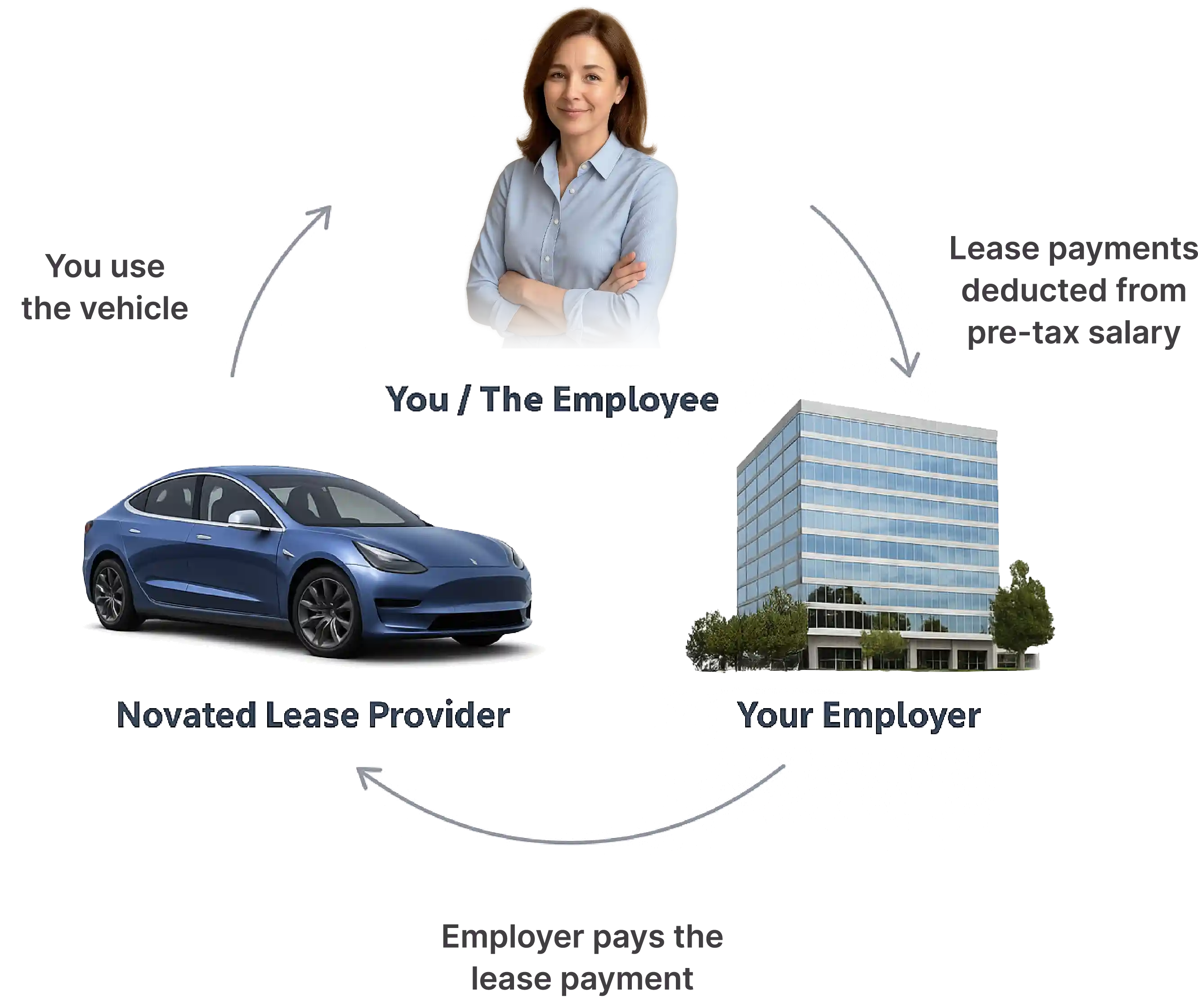
For employers, a novated lease is fairly simple to manage. They deduct your lease payments from your pre-tax salary and pass them to us (the leasing company). It’s low-administration and can be offered as an attractive staff benefit without major upfront costs.
Can your employer say no to a novated lease?
Yes. Your employer must agree to participate in a novated lease for it to work. If they don’t support it, unfortunately, you won’t be able to access the arrangement through that workplace.
Are there any hidden costs in a novated lease?
With a fully maintained lease, most costs are covered, but there can still be extras to watch out for, like exceeding your kilometre limit, optional add-ons (e.g. premium car care packages), early exit fees, or anything outside the lease agreement.
Reading the fine print helps avoid surprises, and our team will always walk you through exactly what’s included and what isn’t.
What happens at the end of a novated lease?
At the end of your lease, you have a few choices. You can pay the residual amount to own the car outright, extend the lease, or hand it back and start a new lease on a different vehicle. This flexibility makes it easy to plan your next move.
What’s the difference between a car loan and novated lease?
The main difference is that a car loan is paid with after-tax money, while a novated lease is structured through pre-tax salary. This allows you to reduce taxable income and save on GST. Novated leases also let you bundle running costs into the lease, making it a more streamlined and tax-efficient way to manage a vehicle.
Is buying a vehicle outright cheaper than a novated lease?
Not always. When you buy a car outright, you’ll usually pay GST on the purchase price, which can be a big extra cost. Plus, the money you’ve saved up to buy that car has already been taxed – meaning you only ever got to save what was left after income tax. So in effect, you’re using your after-tax dollars to pay for the car in full.
With a novated lease, it works differently. You don’t pay GST on the purchase price, and your lease payments (plus running costs) come out of your pre-tax salary. That means you’re using money that hasn’t yet been taxed, giving you more spending power and often making a novated lease far more cost-effective than dipping into savings to buy a car outright.
What is the novated lease fringe benefits tax (FBT)?
Fringe Benefits Tax (FBT) is a tax on the benefit you get from using a car through your employer. With a novated lease, some vehicles – like eligible electric cars – can qualify for an FBT exemption, meaning you can salary package the full cost of the car and running expenses without extra tax, which makes it even more cost-effective.
Can I get a second-hand car on a novated lease?
Yes, you can lease a demo, used, or nearly-new car as long as it meets our criteria. The car typically can’t be older than 15 years by the end of the lease term, but otherwise you have plenty of flexibility to choose a pre-owned vehicle that suits your needs.
Can I get a novated lease for a car I already own?
In many cases, yes. If your existing car qualifies under rules and criteria, you may be able to include it in a novated lease. This can be a great way to turn a car you already own into a tax-efficient salary packaging option.
What running costs aren’t included in a novated lease?
Most everyday costs are covered in a fully maintained lease, but some things aren’t included. These can be things like fines, modifications, or anything outside the agreed lease terms. It’s always worth checking your contract or talking to our experts for clarity.
Will applying for a novated lease affect my credit score?
Yes, applying for a novated lease involves a credit assessment, similar to a car loan. This can appear as a credit inquiry on your report, but as long as you manage your repayments responsibly, it shouldn’t negatively impact your score in the long term.
Do you own the car under a novated lease?
Technically, no – the car is owned by us (your novated lease provider) for the duration of the lease. That’s what makes the arrangement work, because it allows us to claim back the GST as part of our business reporting.
The good news is we pass that saving directly on to you, which can mean thousands off the purchase price (up to $6,334 for FY 2025/26). It’s a benefit you wouldn’t get if you were simply buying the car outright as an employee.
In practice though, it’s very much your car. It’s registered in your name, you’re the one driving it, and you get to make the usual choices about things like insurance, where you service it, and how you use it day to day. The only real difference is the paperwork behind the scenes – which is what makes the tax savings possible.
Do I need to drive a minimum number of kilometres per year?
Not at all. While there used to be minimum kilometre requirements over a decade ago, today it doesn’t matter if you drive 10,000 km, 15,000 km, 30,000 km, or even 50,000 km. You set your desired kilometre limit when you start the lease, and you’re free to use your car however you like.
How many cars are novated in Australia?
There are roughly 400,000 cars on Australian roads under a novated lease, according to Drive. Novated leasing has been a popular way for employees to drive a new or used car while enjoying tax and GST savings for over 36 years.